Back to blog
Meet the OL-450S — A smarter way to automate cart transport

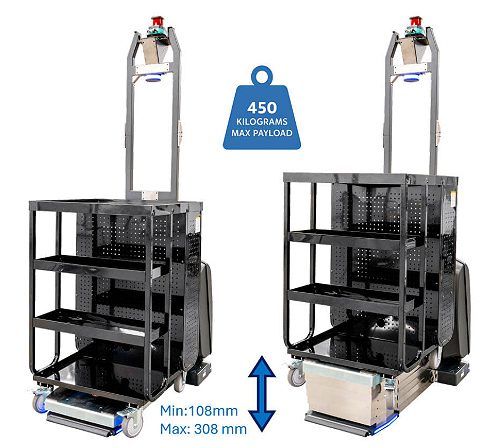
450 kg

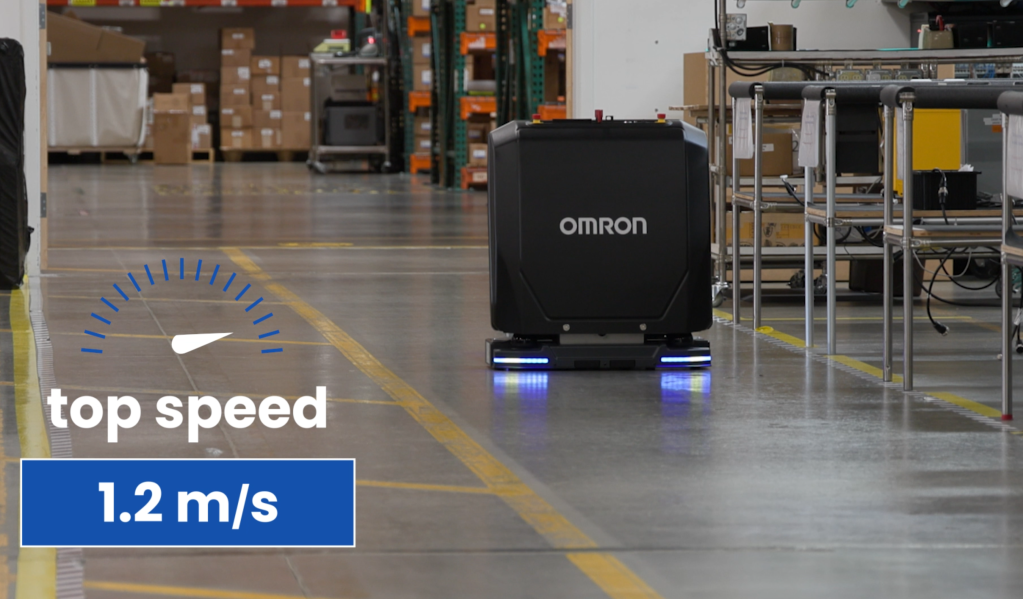
1.2 m/s

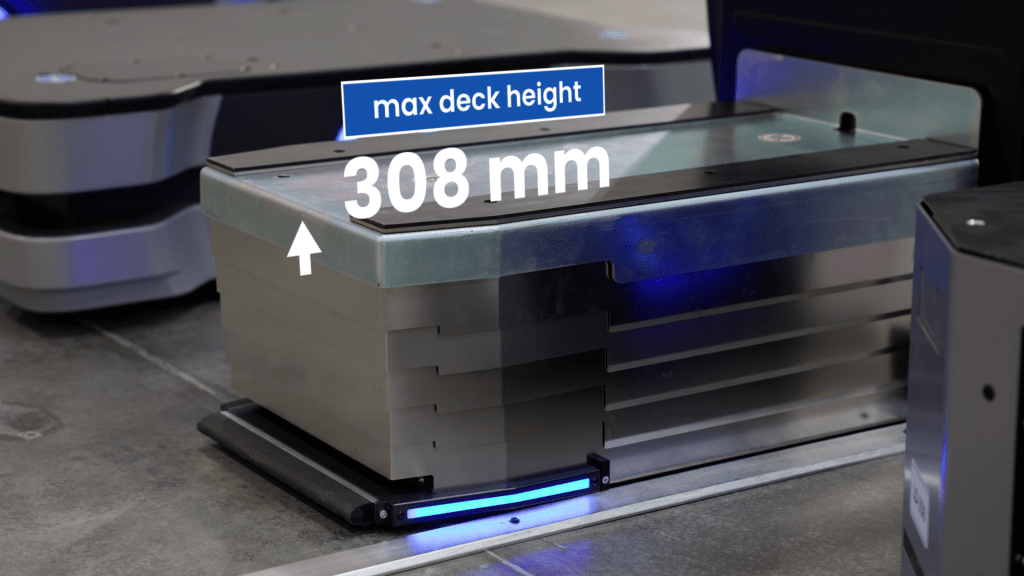
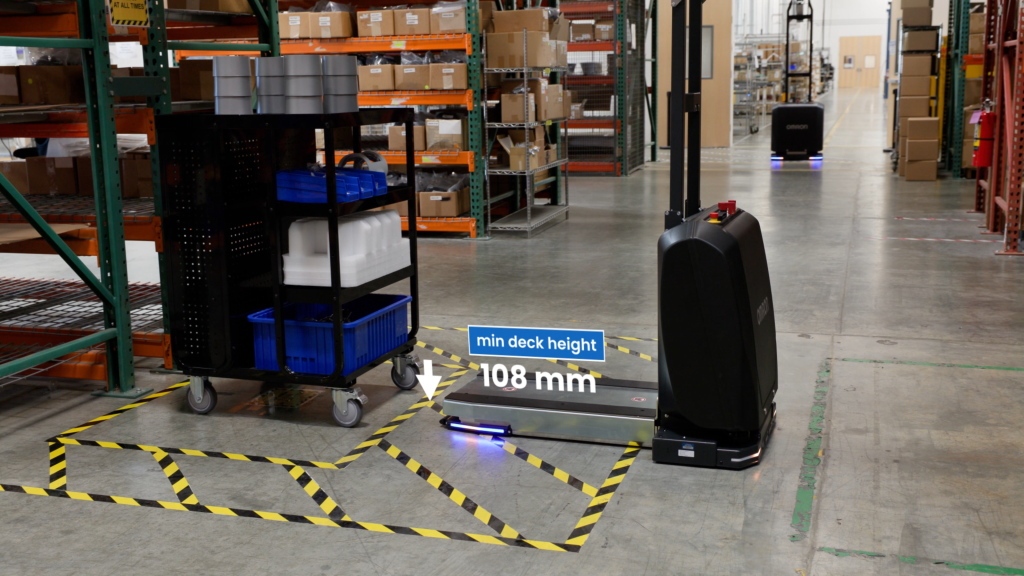
108 – 308mm

360°
Why material flow matters more than ever
Cart transport issues usually start small. A cart is in the wrong place. A trolley shows up late. An operator has to stop what they’re doing to move materials by hand. None of it seems major on its own, but over a shift, those small interruptions can slow handoffs, increase walking time, and make production flow harder to predict.
The challenge is that manual transport often blends into the background. It feels like part of the job until operators start searching for carts, waiting on materials, or stepping away from production tasks to keep things moving. In fast-moving environments, these moments add up quickly, turning routine moves into a steady source of lost time and disrupted flow.
From moving carts to controlling flow
Effective cart transport automation needs to do more than replace a manual trip. It has to perform in the real conditions of the floor: shared routes, tight spaces, changing priorities, and constant movement. That means supporting:
- Predictable transport between workcells, staging areas, storage zones, and lines
- Reliable navigation around people, carts, equipment, and moving obstacles
- A compact footprint for narrow aisles, elevators, doorways, and low-clearance areas
- Industrial payload capacity for carts, racks, roll cages, and trolleys
- Simple operation that can scale as transport needs grow
Meet the OL-450S
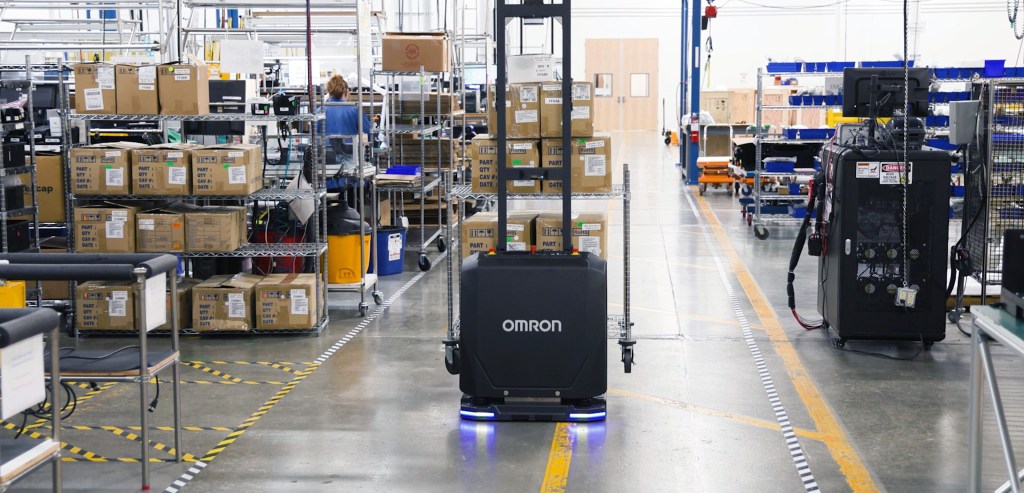
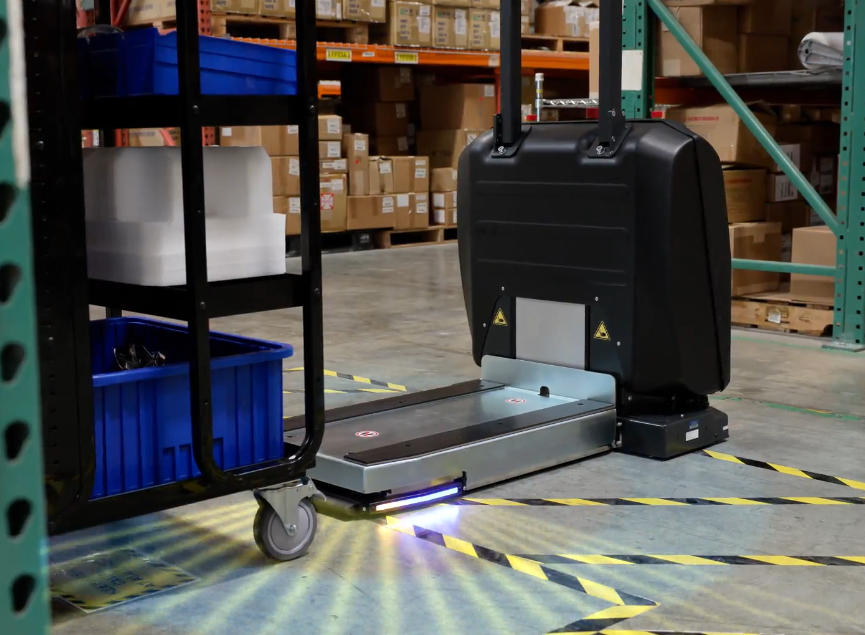
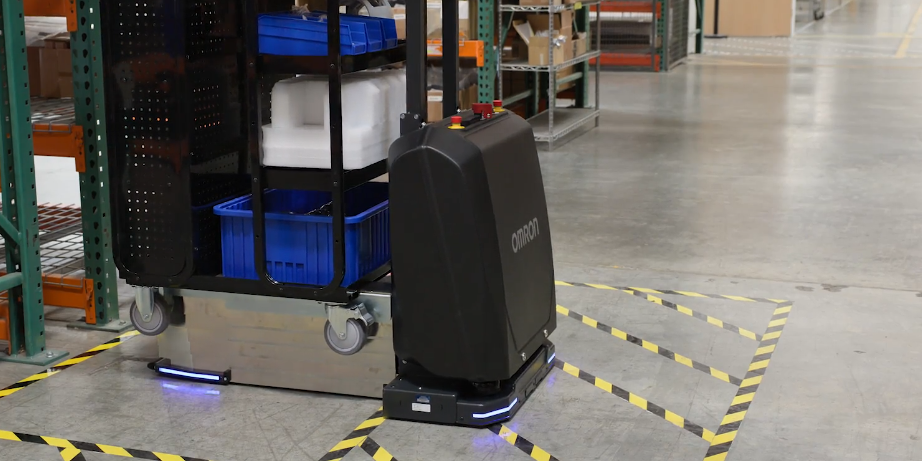
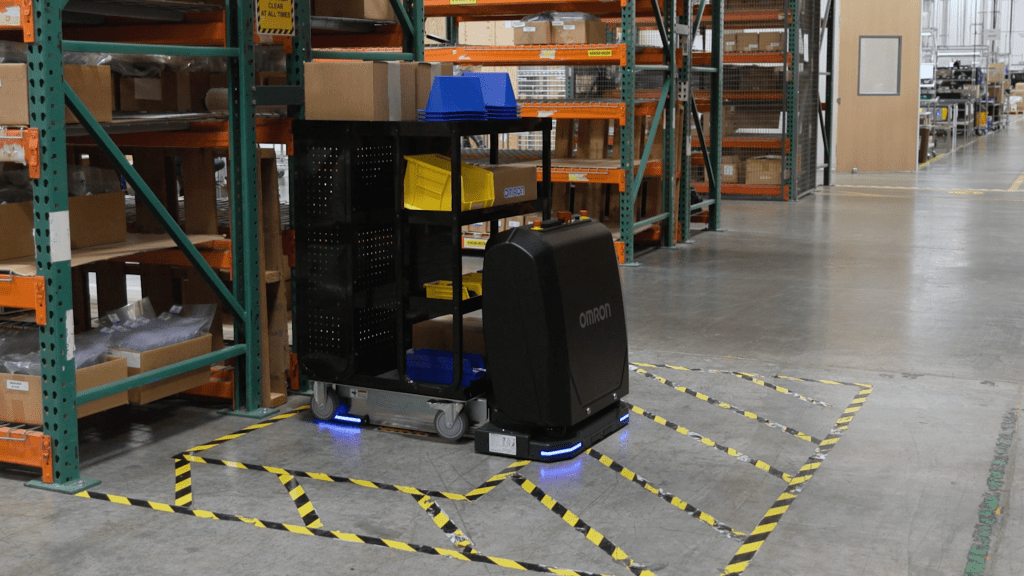
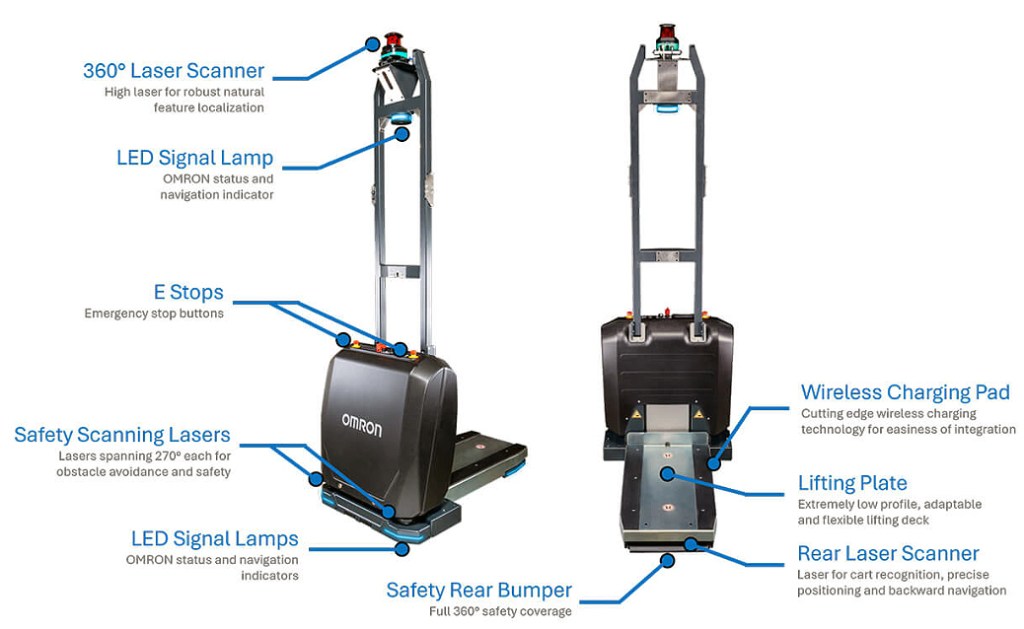
The OL-450S is OMRON’s turnkey AMR solution for cart transport automation. Built for manufacturing and intralogistics environments, it picks up and moves carts, trolleys, roll cages, and similar load carriers without requiring operators to leave higher-priority work.
Unlike general-purpose mobile robots adapted for cart movement, the OL-450S is designed around the realities of cart transport from the start. It combines low-profile lifting, omni-directional mobility, and a compact footprint to support movement through tight spaces and mixed-traffic areas. Its lifting range and payload capacity allow it to work with a variety of compatible carts and load carriers, while its compact design helps it move through space-constrained routes.
The result is a practical, purpose-built platform for keeping materials moving with less manual effort.
Key specifications at a glance
- Payload: 450 kg
- Lift Range: 108 mm – 308 mm
- Top Speed: 1.2 m/s
- Safety Coverage: 360°
- Runtime: up to 11 h no payload, 7 h full payload
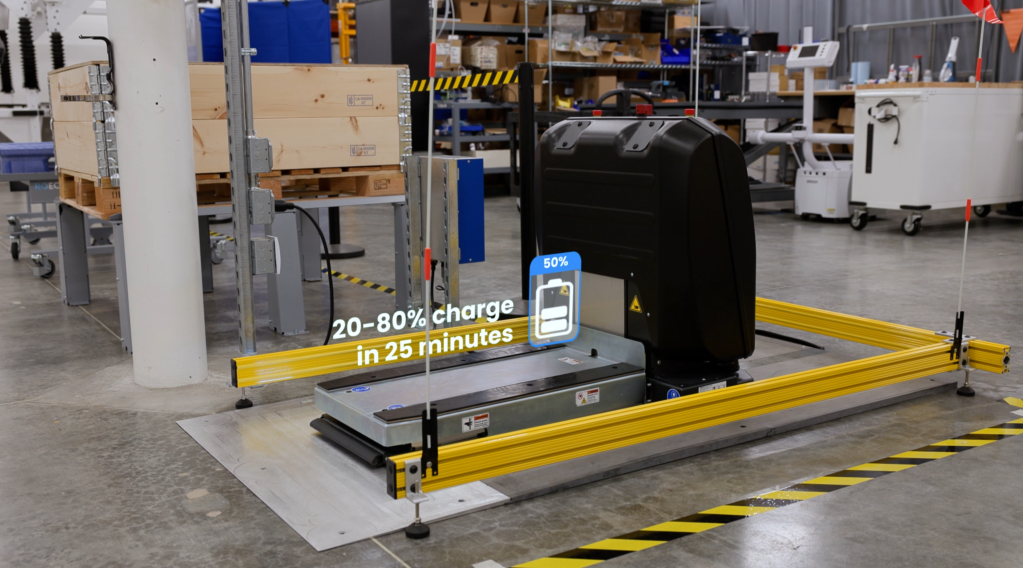
- Fast Charging: As little as 25 minutes
- Fleet Management: FLOW Core software
Built to match your environment
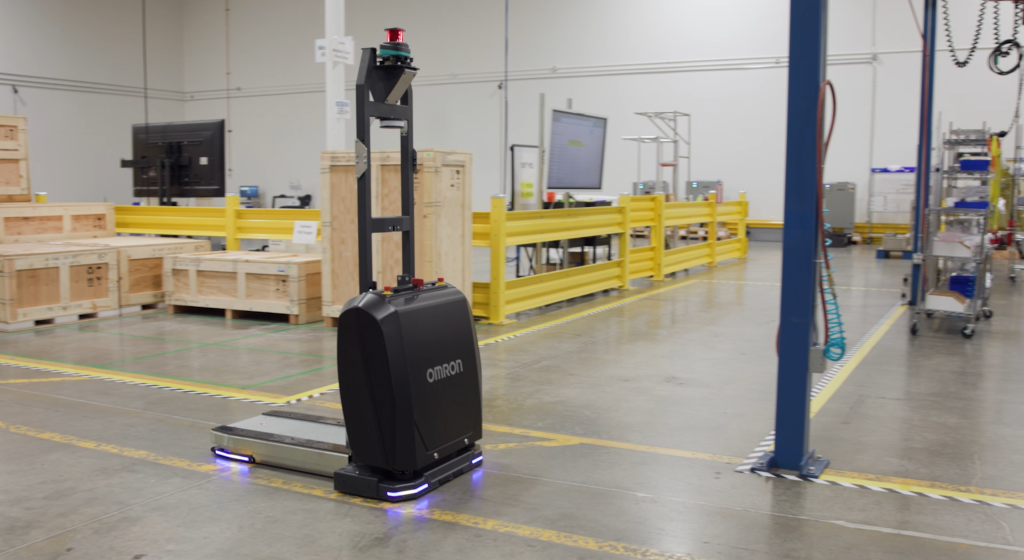
Different facilities place different demands on autonomous cart transport. That’s why the OL-450S offers multiple mast configurations, allowing teams to balance clearance, visibility, and navigation performance for their specific environment.
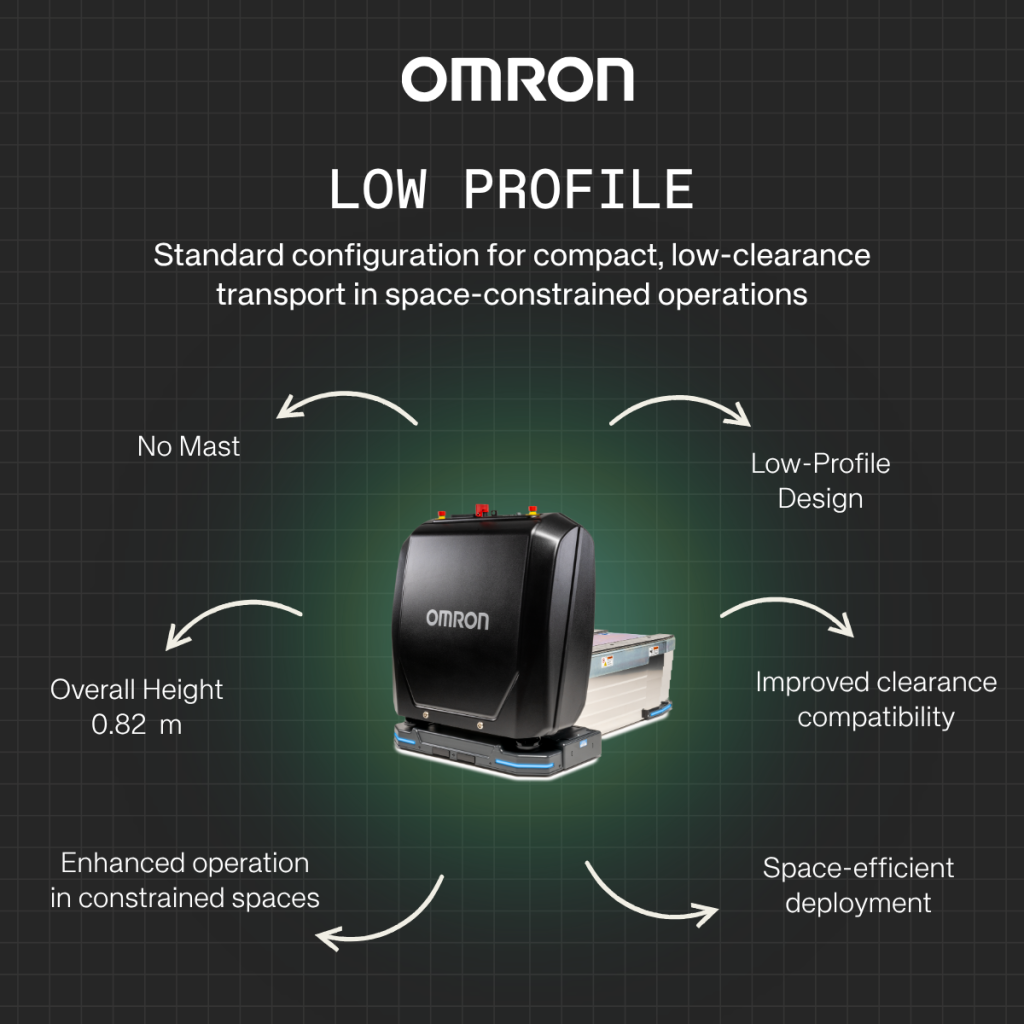
The standard no-mast configuration keeps the OL‑450S at its lowest profile, making it well suited for compact applications where clearance is limited. It supports movement through narrow aisles, low door sections, overhead structures, and fixed production areas where added height could reduce route flexibility.
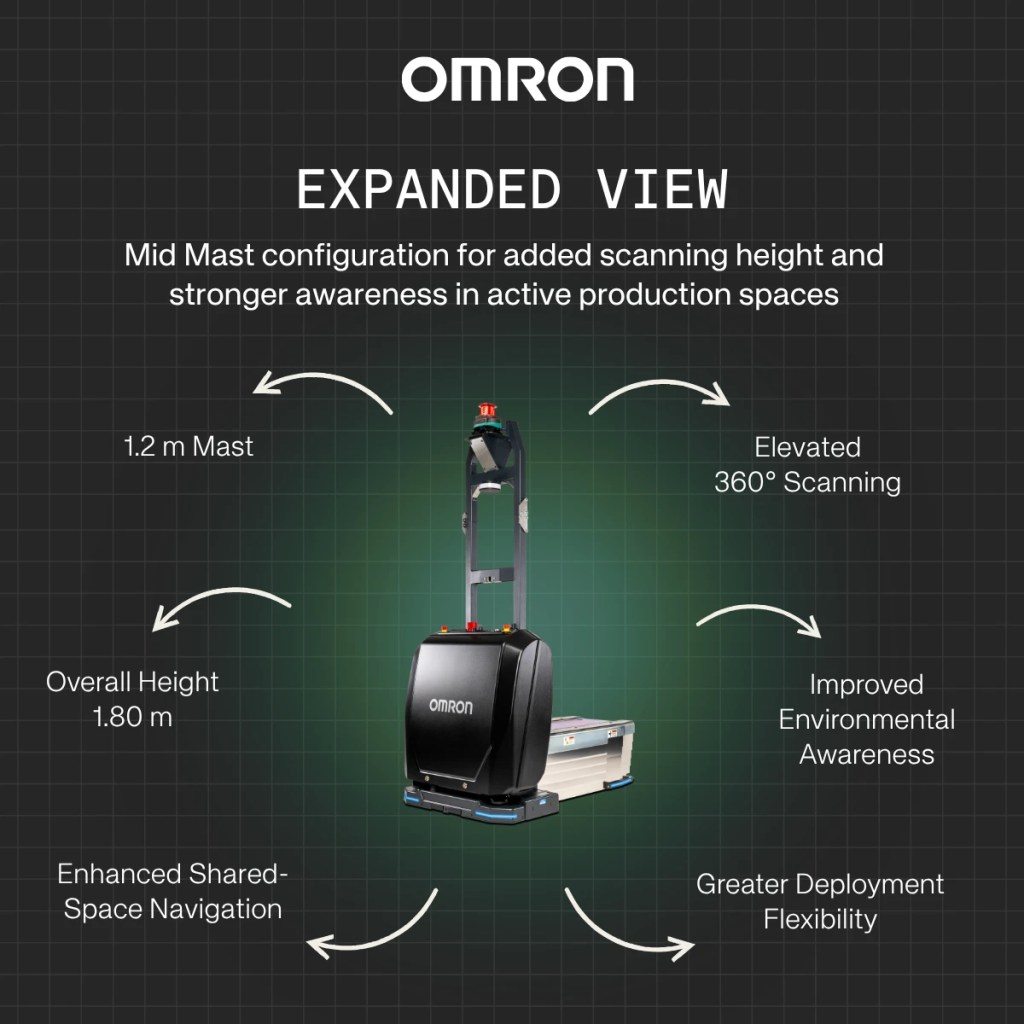
The mid-mast configuration adds an elevated scanning position for dynamic, high-traffic environments where stronger localization and navigation are needed, but vertical clearance still matters. By raising the scanner above floor-level activity, it improves visibility in shared spaces with moving carts, people, and equipment while preserving access through elevators, doorways, and low overhead structures.
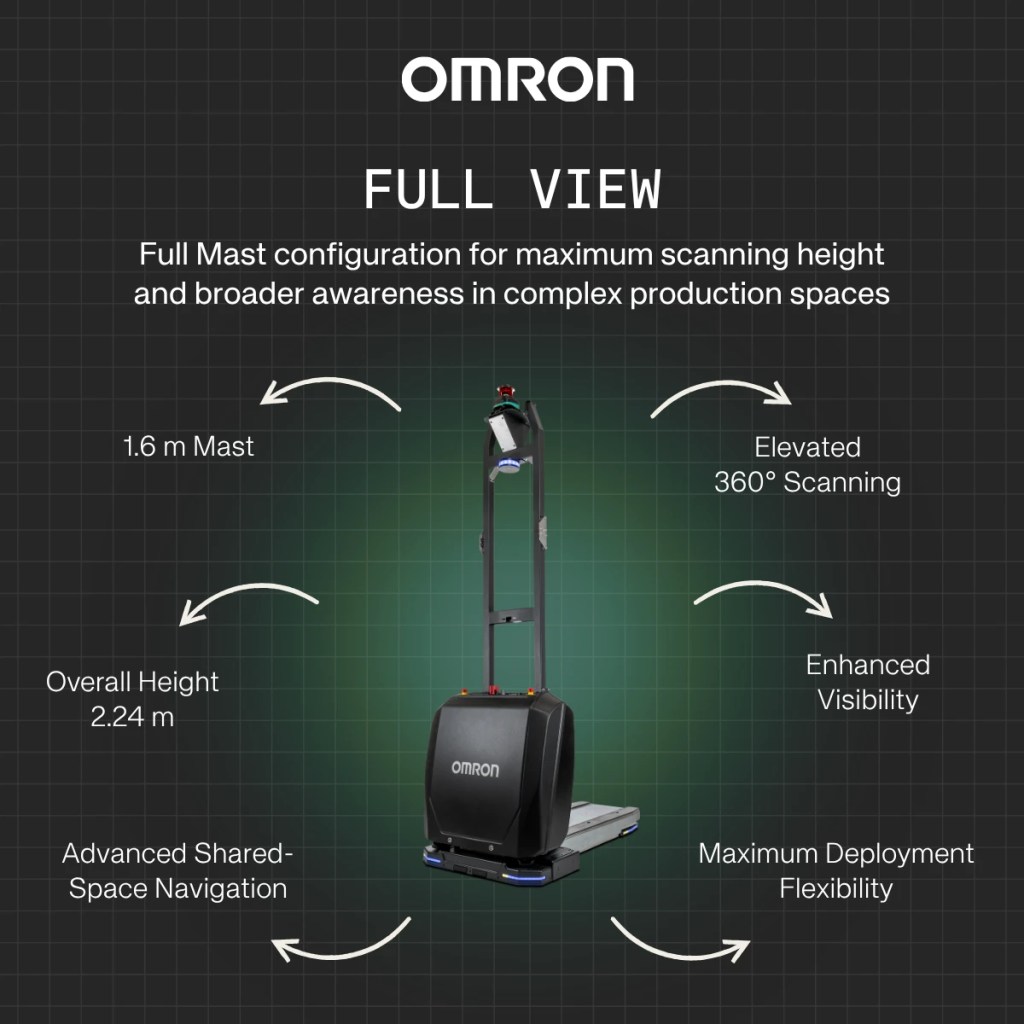
The full-mast configuration provides the highest scanning position for larger, busier, or more visually complex environments. When height constraints are not a limiting factor, this configuration helps maximize scanner visibility and supports robust localization and navigation by referencing stable features higher in the facility.
| Configuration | Best fit | Primary benefit |
|---|---|---|
| No mast | Low-clearance routes and compact layouts | Keeps the platform as compact as possible |
| Mid mast, 1.2 m | High‑traffic, dynamic environments with height restrictions | Improves localization and navigation while maintaining access through tight clearances |
| Full mast, 1.6 m | Most applications in highly dynamic, high‑traffic environments | Maximizes localization and navigation performance with the highest scanning position |
“With the expanded OL‑450S configurations, we’re giving customers the flexibility to match the robot to their environment instead of forcing the environment to adapt to the robot,” said Mona Fahimi, Global Product Manager for OL‑450S at OMRON Robotics.
Adaptable to the way materials move
Every facility has its own way of moving materials. Carts, routes, staging areas, and handoff points are often already built into the rhythm of production. The goal of automation is not to disrupt that rhythm, but to make it more consistent.
Works with existing carts and trolleys
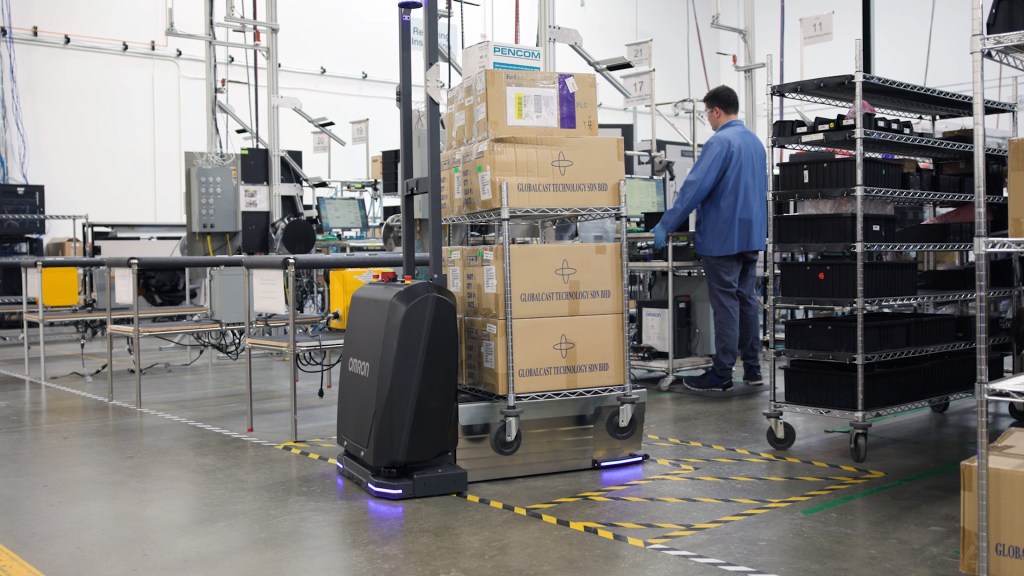
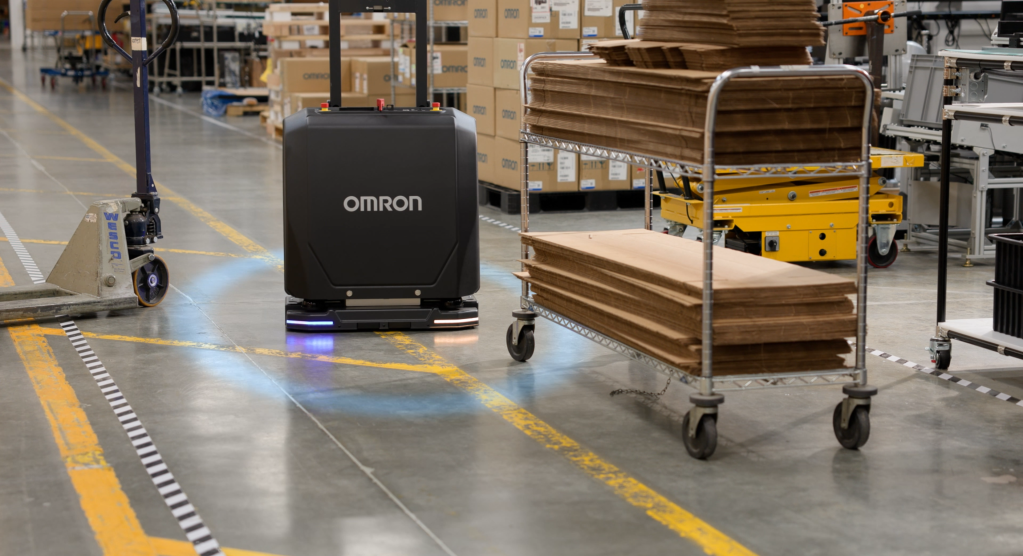
The OL-450S can work with many existing carts, trolleys, and roll cages, helping manufacturers automate routine moves without redesigning the entire process around the robot. Teams can reduce manual handling while preserving the material flow patterns operators already know.
Configured for application-specific needs
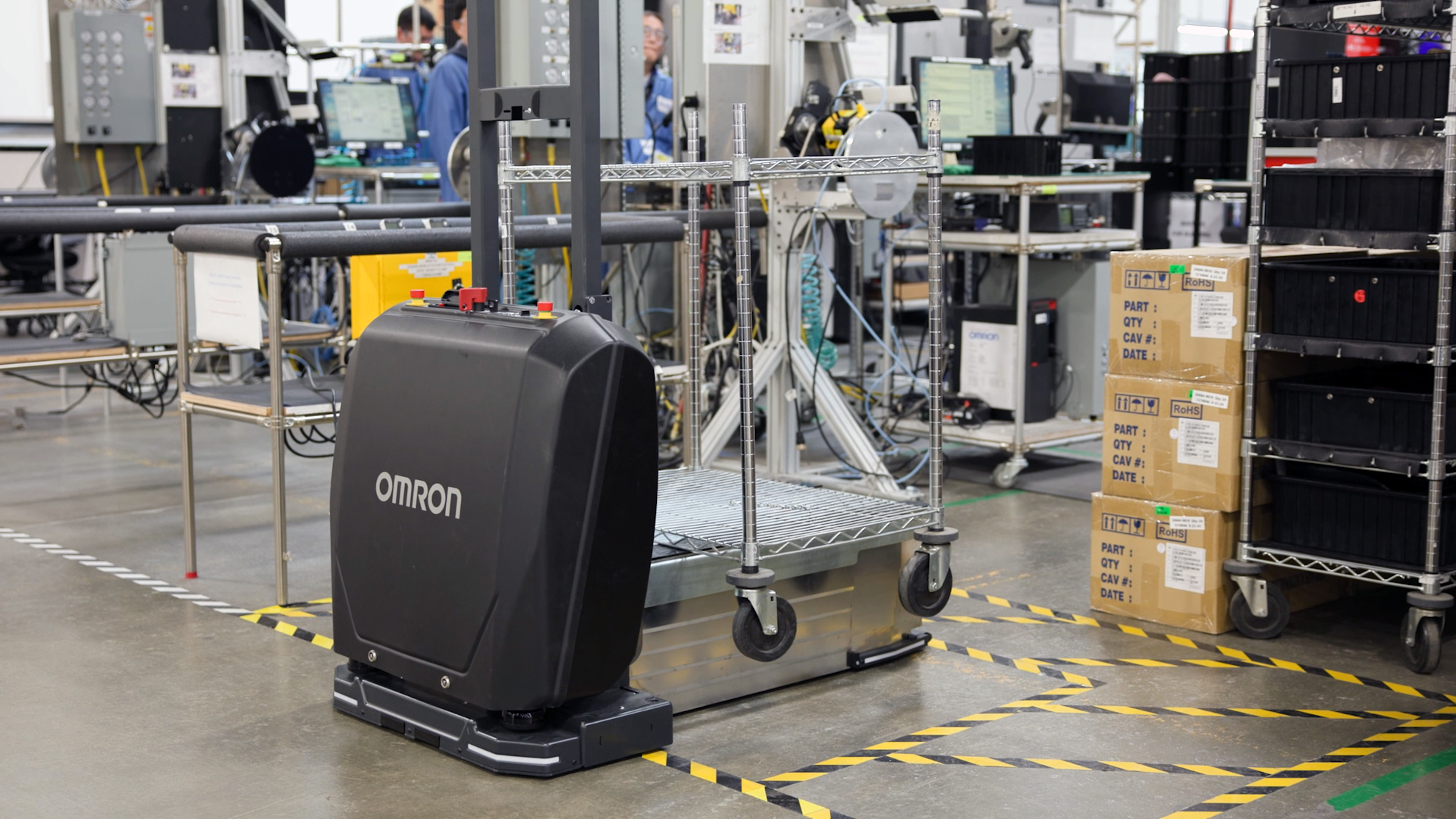
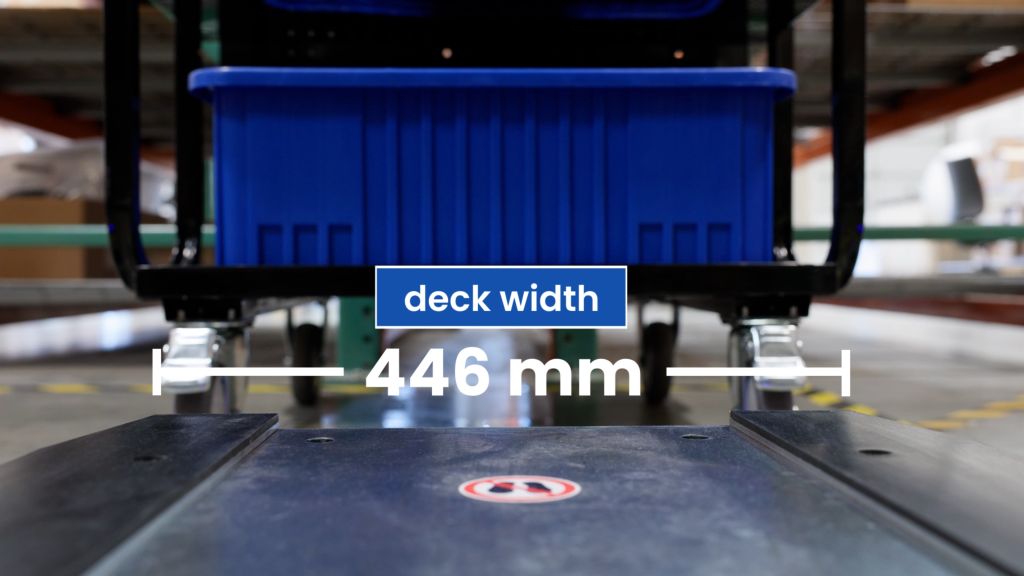
Because cart designs vary from site to site, the lifting plate can be modified by system integrators within defined guidelines. Height, width, or length adjustments can help accommodate cart geometry, align with railings, or support larger cart formats, giving teams more flexibility to match the AMR to the application.
Ready for steady day-to-day use
For daily production use, availability matters. The OL-450S supports omni-directional movement, wireless charging, up to 7 hours of runtime at full payload, and recharge from 20% to 80% in as little as 25 minutes. That helps keep automated transport available across shifts.
Scalable across routes and fleets
When transport needs expand, the system can expand with them. Through FLOW Core, the AMR can operate as part of a broader fleet with centralized traffic control, task management, and system visibility, helping teams extend automation across more routes, workflows, and facilities over time.
Where cart transport automation fits into daily operations
The best opportunities for automation are often the tasks teams repeat every day. In many facilities, that includes moving carts between storage, staging, production areas, warehouse zones, and shared routes where timing and consistency matter.
Production support and line-side replenishment
Production teams depend on having the right parts, tools, and work-in-progress materials available when and where they are needed. When operators have to leave their stations to move carts manually, even short trips can create interruptions that affect the pace of work.
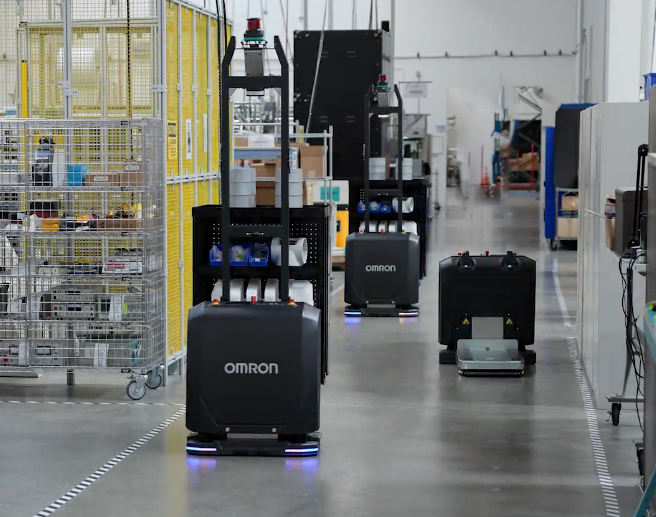
By automating routine transfers between storage, staging, workcells, and line-side locations, the OL-450S helps reduce manual travel, support smoother handoffs, and keep operators focused on production.
Warehouse and intralogistics transport
Warehouses and distribution centers rely on constant movement between picking, packing, consolidation, storage, and outbound staging. When carts and racks are moved manually throughout the day, teams can lose time to repetitive walking, pushing, and waiting.
Automating these routine moves can improve internal transport consistency, ease congestion in shared pathways, and help teams focus on higher-priority work instead of repeated point-to-point transport.
Tight spaces and mixed traffic
Material movement does not always happen in wide-open areas. Many routes pass through narrow aisles, low-clearance paths, busy intersections, and shared spaces where people, carts, forklifts, and equipment move at the same time.
In these environments, flexibility matters. With a compact footprint, omni-directional movement, and modular mast configurations, the OL-450S can support cart transport in space-constrained areas. For applications where clearance is especially important, the Standard configuration provides a low-profile option.
Better flow starts with understanding the workflow
Improving material flow does not always require changing the entire operation. Often, the first step is looking closely at the routine moves that create delays, extra walking, or uncertainty throughout the day.
Cart transport is one of those areas. When these movements become more consistent, teams can create steadier flow across production, warehousing, and internal logistics processes.
The OL-450S gives teams a practical way to automate routine cart movement, but the robot is only one part of the larger workflow. A strong deployment depends on the real conditions on the floor, including cart type, load weight, route layout, clearance, traffic, and handoff points.
What to evaluate first
If cart movement is creating friction in your operation, start with the workflow itself. Which routes are repeated most often? Where do teams lose time waiting, walking, or searching for materials? Which carts, loads, clearances, and handoff points need to be considered?
Answering these questions helps determine where automation can create the most value and how the solution should be configured for your environment.
OMRON can help evaluate those requirements and map out the right approach for your operation.
Back to blog

Stay connected