Back to case studies
Automating End-of-Line Bottle Feeding with High-Speed Circular Tracking

Medical

Packaging

i4H SCARA Robot
A compact robotic cell for medical diagnostics packaging
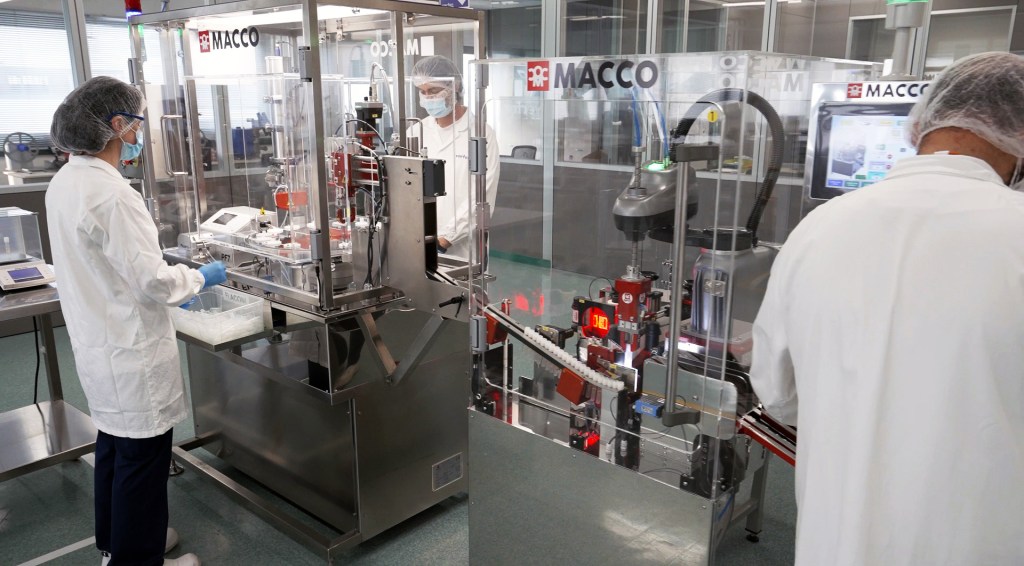
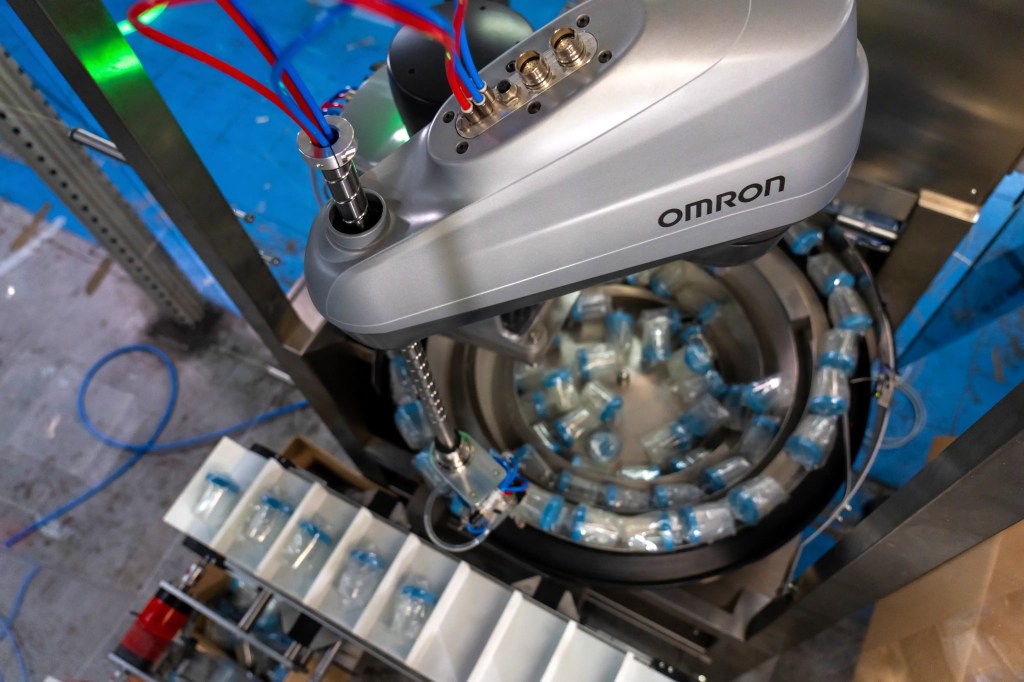
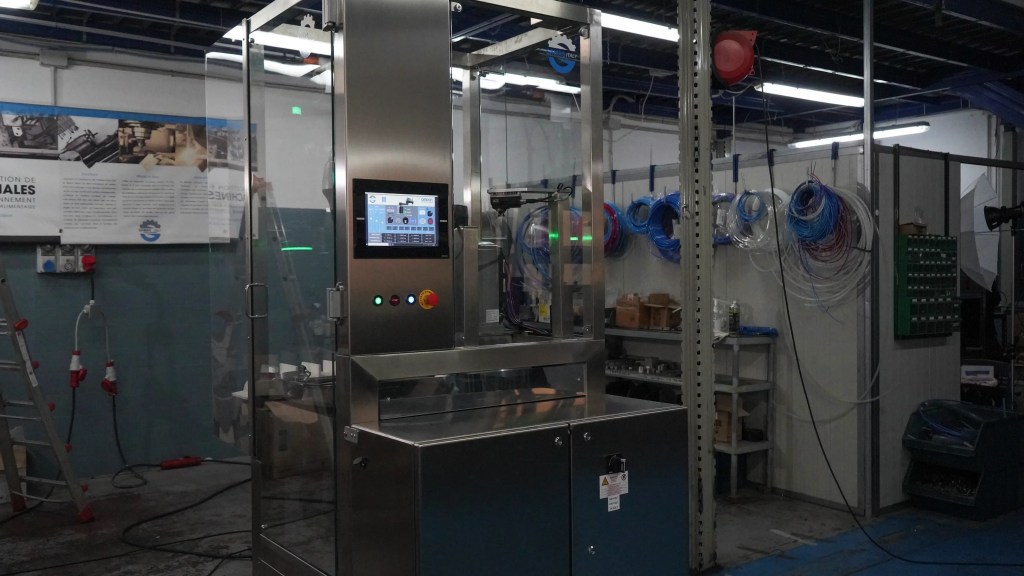
In medical diagnostics packaging, end-of-line bottle feeding is often handled manually or with conventional mechanical systems that can be difficult to adapt across formats. For Samas Italy, this created a bottleneck at the final stage before flow-pack and cartoning machines, with repetitive manual work, limited flexibility, and reduced line continuity. The goal was to automate this part of the process without adding unnecessary complexity or requiring a large machine footprint.
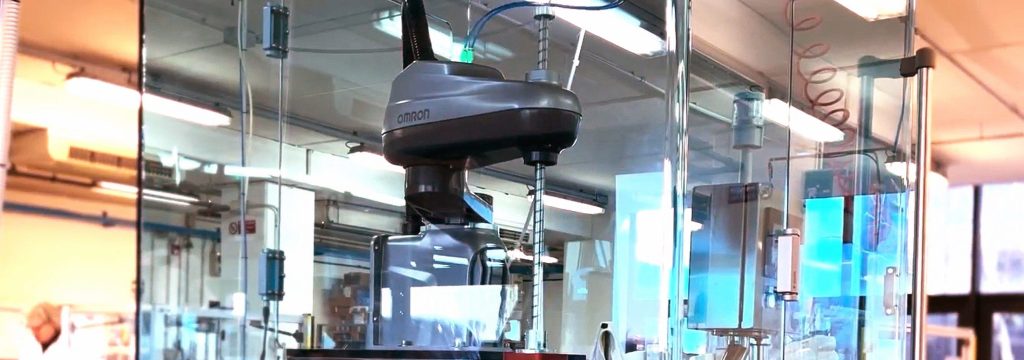
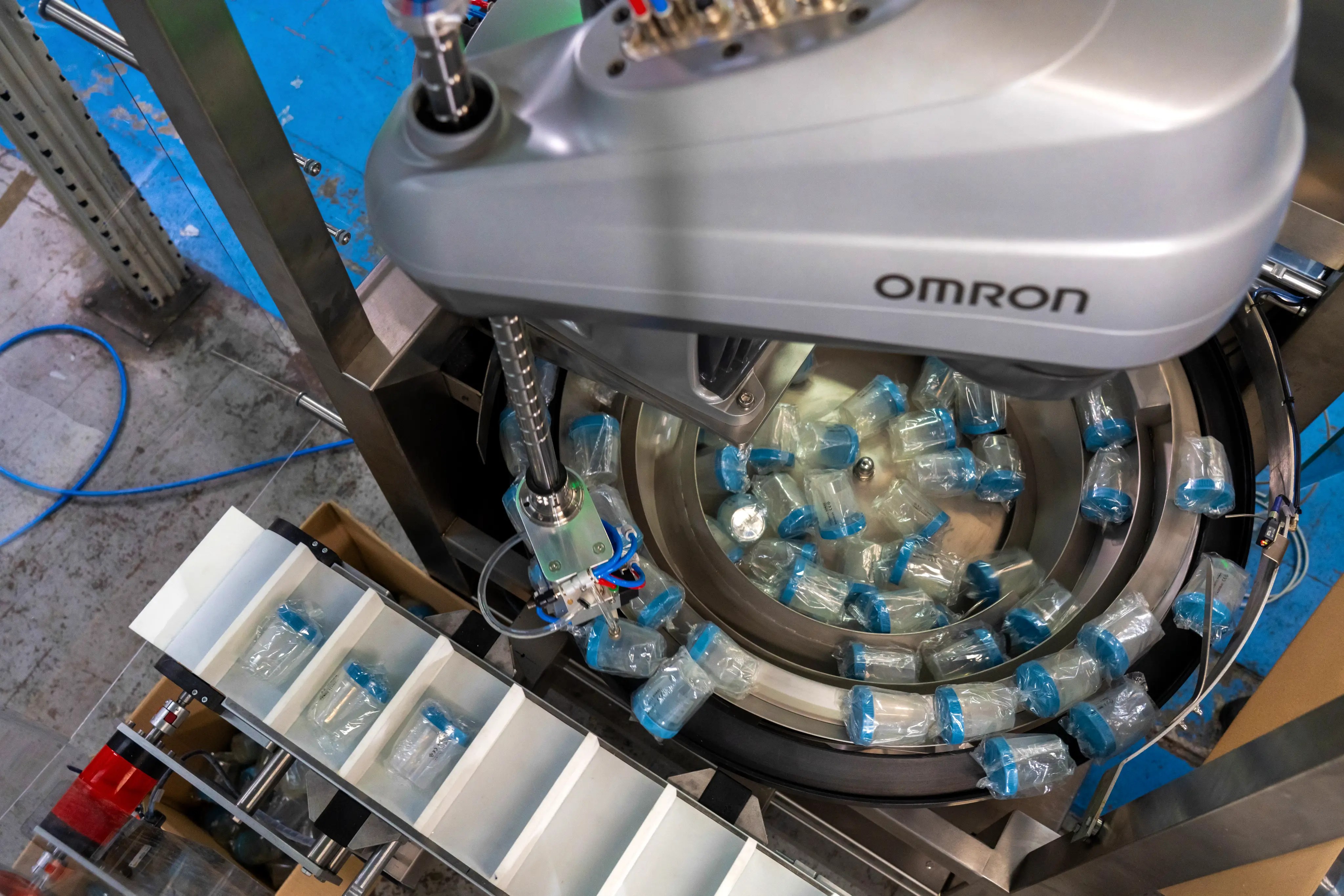
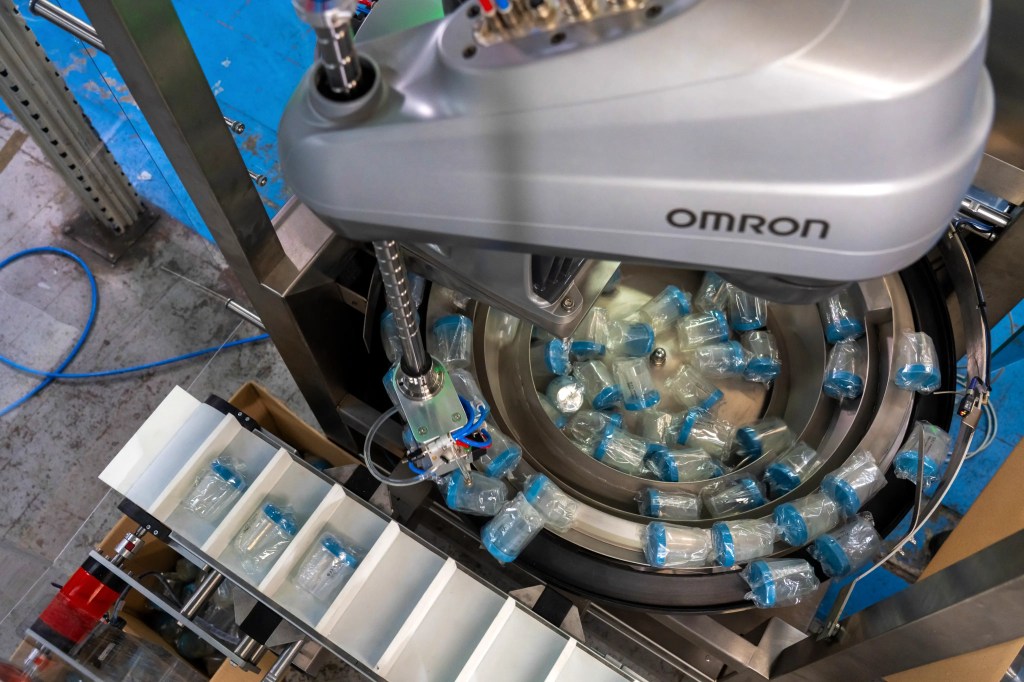
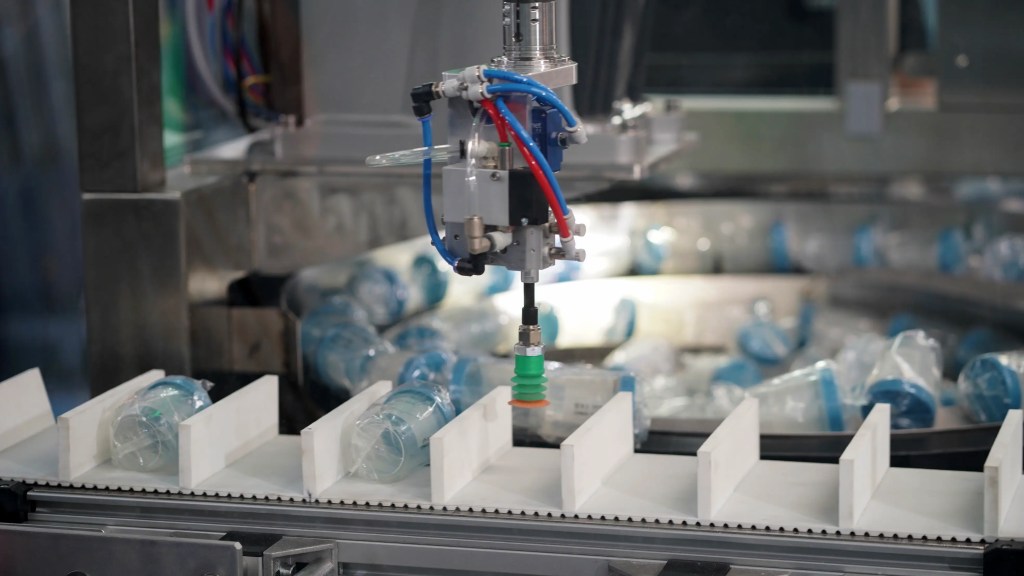
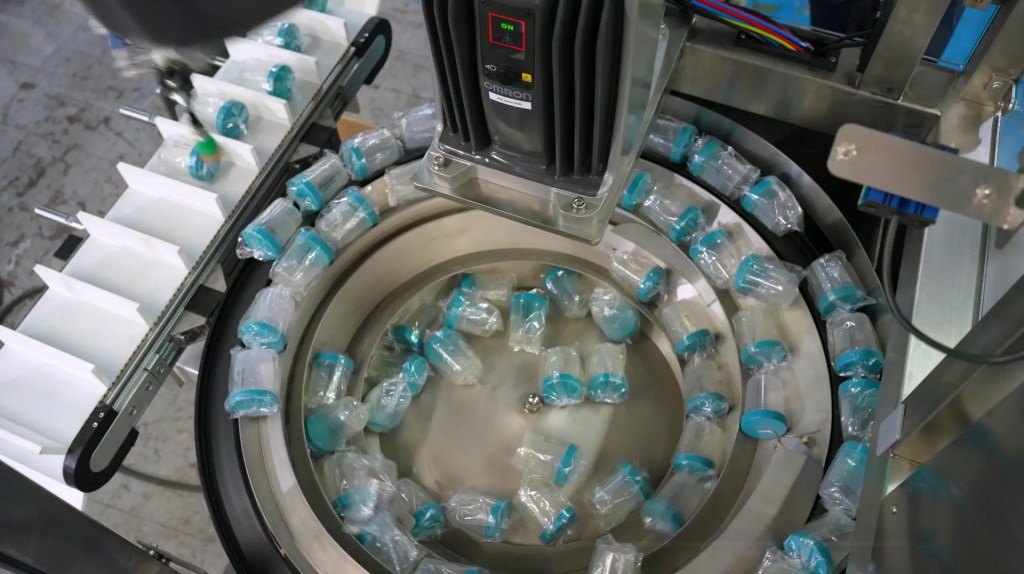
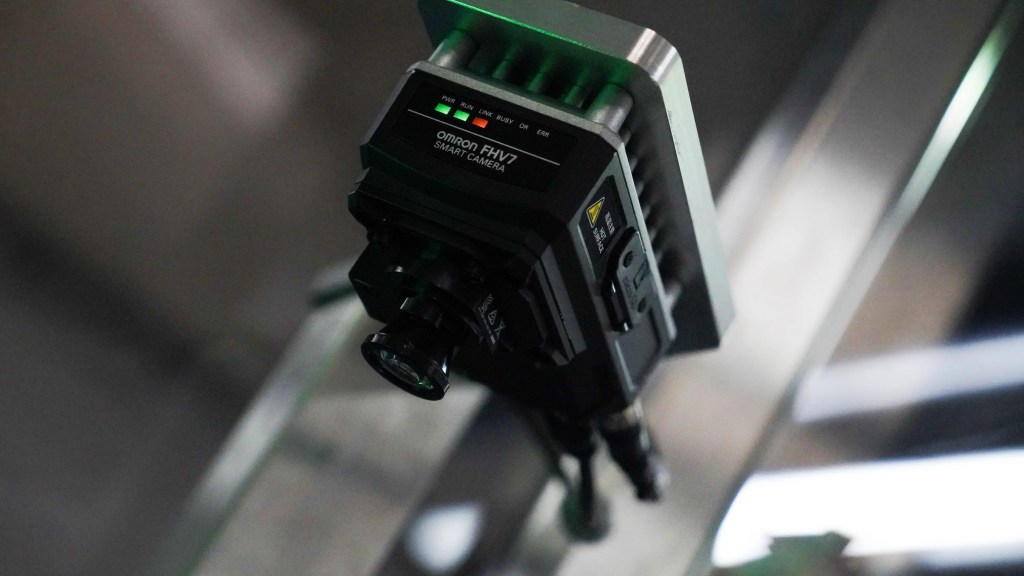
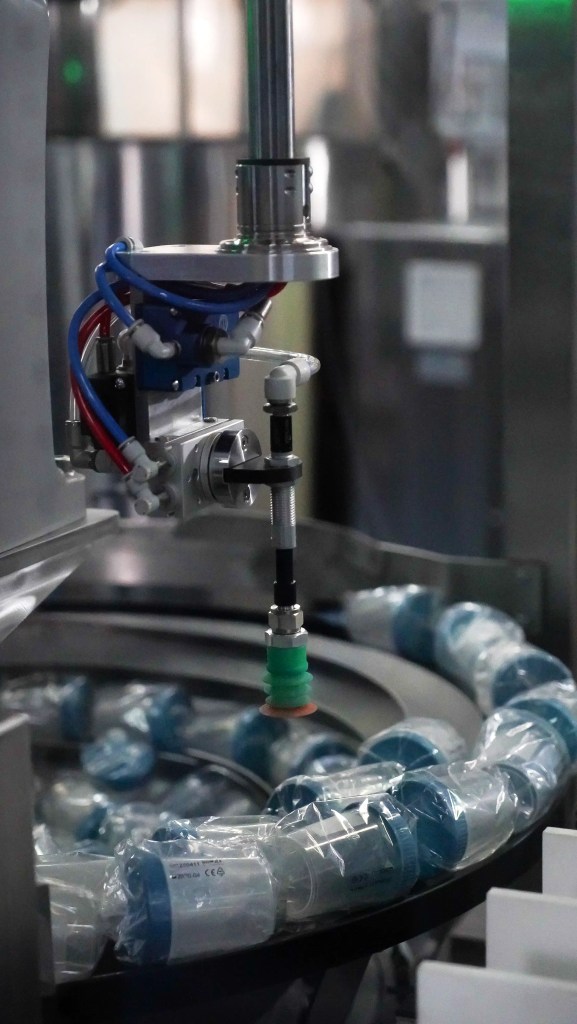
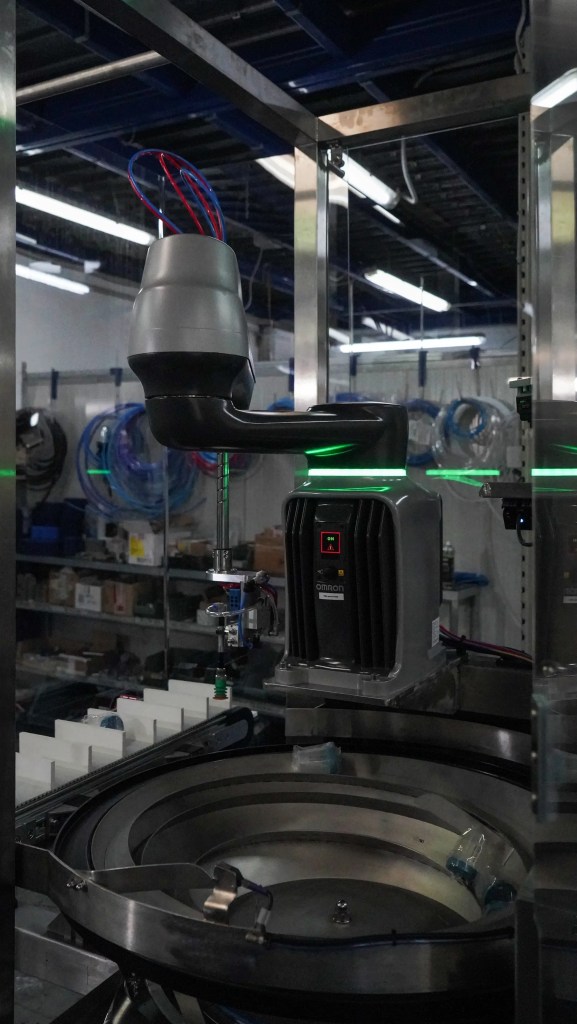
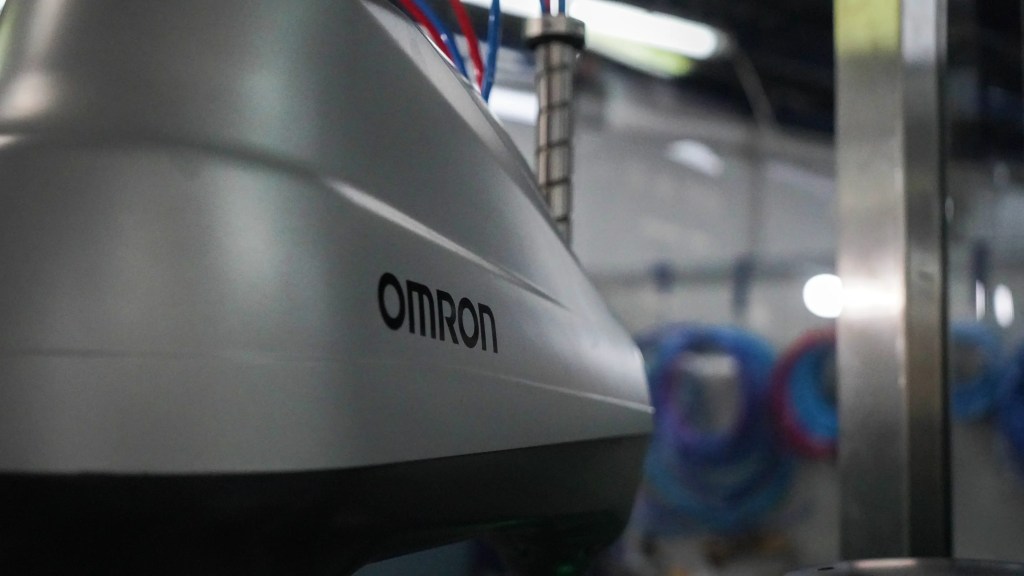
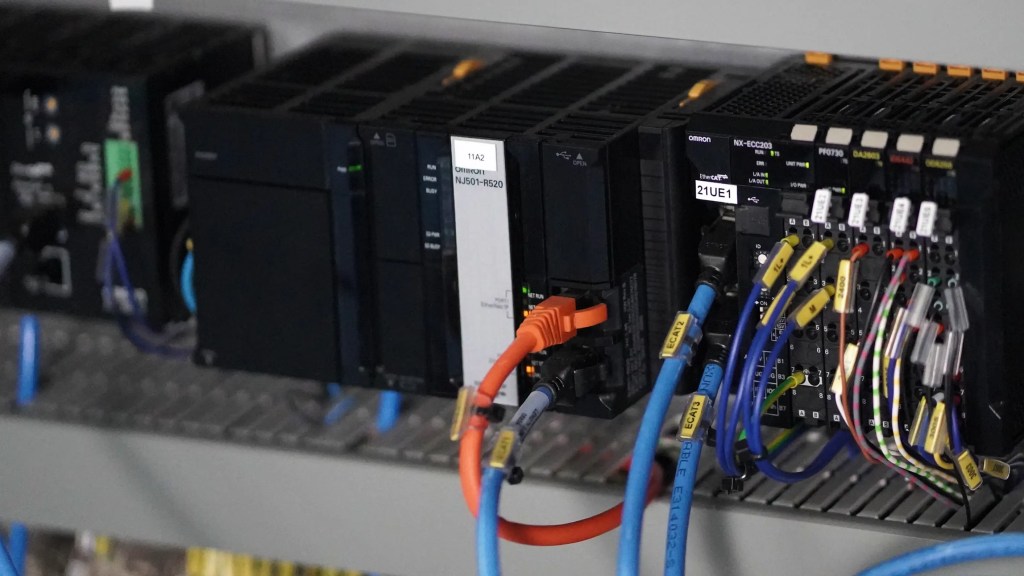
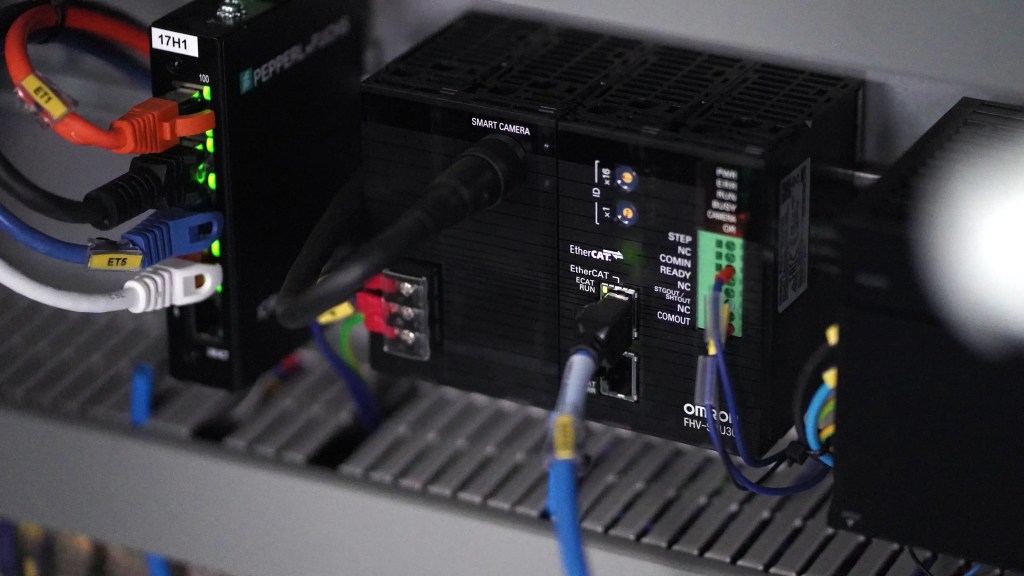
To solve it, Samas developed a compact circular-tracking cell together with OMRON, combining i4H SCARA robots, the FHV7 vision system, 1S servo drives and motors, and an NJ-series controller within the Sysmac architecture. Using the OMRON Robotics Packaging Library (ORPL), the robot identifies bottles on a rotating ring, tracks them in motion, and places them onto a synchronized linear conveyor in one continuous sequence.
This creates a compact robotic end-of-line packaging solution with precise motion control, reduced mechanical complexity, and primarily digital format changeovers.
The result is a faster, more flexible bottle feeding process with standard throughputs of 50–60 parts per minute, reaching up to 80 parts per minute in some configurations. Repetitive manual end-of-line operations are significantly reduced, process reliability is improved, and changeovers can be completed quickly with minimal mechanical adjustment. For Samas, the project automated a difficult end-of-line process while supporting the flexibility needed for regulated, high-mix packaging environments.
Watch Samas’ solution in action:
“Beyond our initial expectations, we managed to further increase machine speed. Most importantly, we truly completed line automation from start to finish, eliminating a critical manual bottleneck.” — Marco Alfani, CEO of Samas
Results at a glance:
- Up to 80 parts per minute in automated bottle feeding
- 50–60 parts per minute in standard operating configurations
- Significant reduction in repetitive manual operations at the end of the line
- Primarily digital format changeovers with minimal mechanical adjustment
- Compact footprint suited to space-constrained production environments
- Improved process reliability and reduced waste
- Lower labor and operating costs through reduced manual handling
Flexible bottle handling for regulated packaging lines
This application shows how end-of-line bottle handling can be automated to reduce manual work, increase throughput, and simplify changeovers without adding unnecessary complexity. For lines handling multiple bottle formats, the solution helps reduce bottlenecks and improve transfer into flow-pack, cartoning, and other downstream packaging processes.
If your team is looking to improve bottle feeding, reduce manual handling, or support more flexible packaging operations, we can help evaluate an automation approach that fits your line layout, throughput targets, and format requirements.
Back to case studies

Book a consultation