Back to blog
Turning AMR Stops into Charging Opportunities
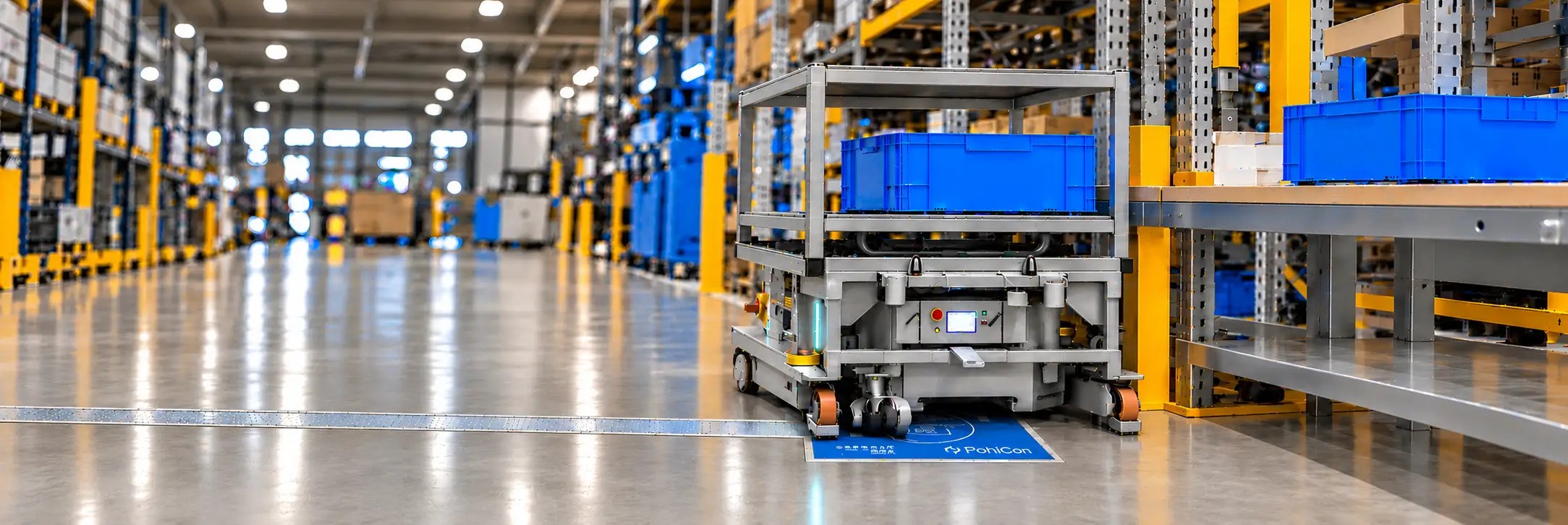
When charging becomes part of the workflow
Every AMR route has a rhythm: move, stop, wait, hand off, move again.
Traditional docking stations support that rhythm well in many operations. A robot completes a task, returns to a dock, charges, and heads back out when ready.
But as mobile robots take on more of the day’s transport work, charging can become more closely tied to material flow. Robots spend more time on active routes. Floor space becomes more valuable, and charging has to fit into a busier operation.
That does not make conventional charging the wrong choice. It means the charging strategy should match the way the fleet actually works.
From one charging stop to many charging moments
In a conventional setup, charging is often handled as a separate event. A robot leaves its active route, travels to a dedicated dock, charges in a longer session, and returns to operation when it is ready.
That model can be effective, especially when routes, schedules, and charging windows are predictable. But as utilization increases, long charging windows may be harder to find between tasks.
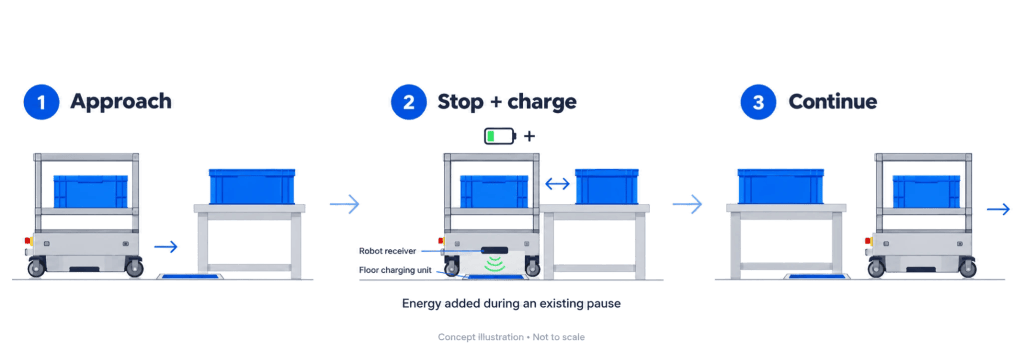
In-process wireless charging shifts the timing. Instead of relying only on one longer charging stop, selected pauses in the route can become short, repeatable moments to add energy while the robot remains close to the workflow.
Opportunity charging is the strategy: add energy during short, useful moments instead of relying only on one longer charge. Wireless charging is the enabling technology. When a compatible robot is positioned over a charging point, energy transfer can begin automatically, without exposed contacts to align, manual plug-in steps, or a separate trip away from the process.
“A process-integrated wireless charging infrastructure helps AMRs and AGVs receive energy where it best supports the workflow — creating a more harmonized energy supply for highly efficient operations.” — Dennis Thiele, Team Lead Wireless Charging Infrastructure, PohlCon
The best charging opportunities may already exist
A mobile robot does not spend the entire day driving. It waits for conveyors to clear, stages near workstations, pauses while material is transferred, or holds position while traffic moves through shared areas.
These moments are not wasted time. They are part of the process. If a robot already stops at a predictable location, that stop may be able to do more.
The goal is not to place chargers everywhere. It is to identify stops that happen often enough, last long enough, and are consistent enough to support useful energy transfer.
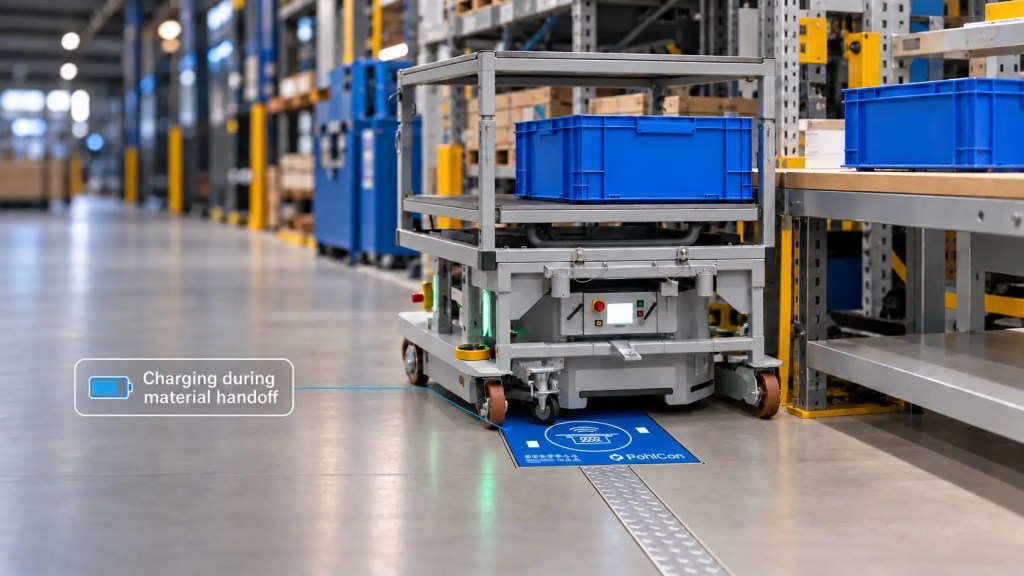
Good candidates are usually recurring stop points in the workflow:
- Conveyor transfer points
- Material handoff stations
- Machine loading and unloading areas
- Workcells and production areas
- Staging lanes and buffer zones
- Cleanroom or semiconductor process areas
In each case, the charging opportunity begins with the route itself.
How in-process wireless charging works
The idea behind in-process wireless charging is simple: bring charging to the places where the robot already works.
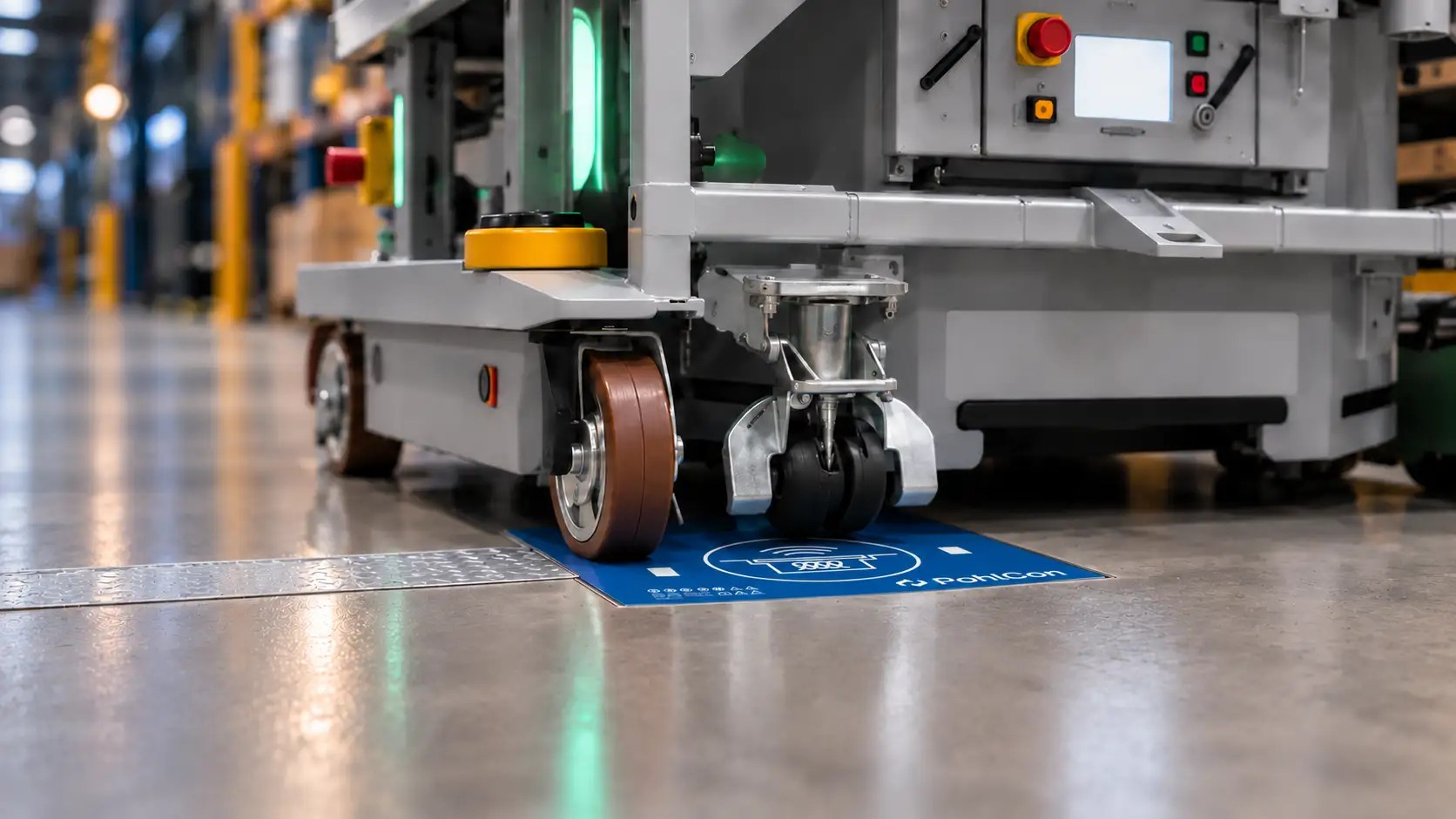
Energy is transferred between a floor-side charging unit and a receiver on the robot when the robot is positioned over the charging point. Charging begins automatically, without exposed contacts to align manually and without cables to connect.
The operational difference is not only how power is transferred. It is where charging happens.
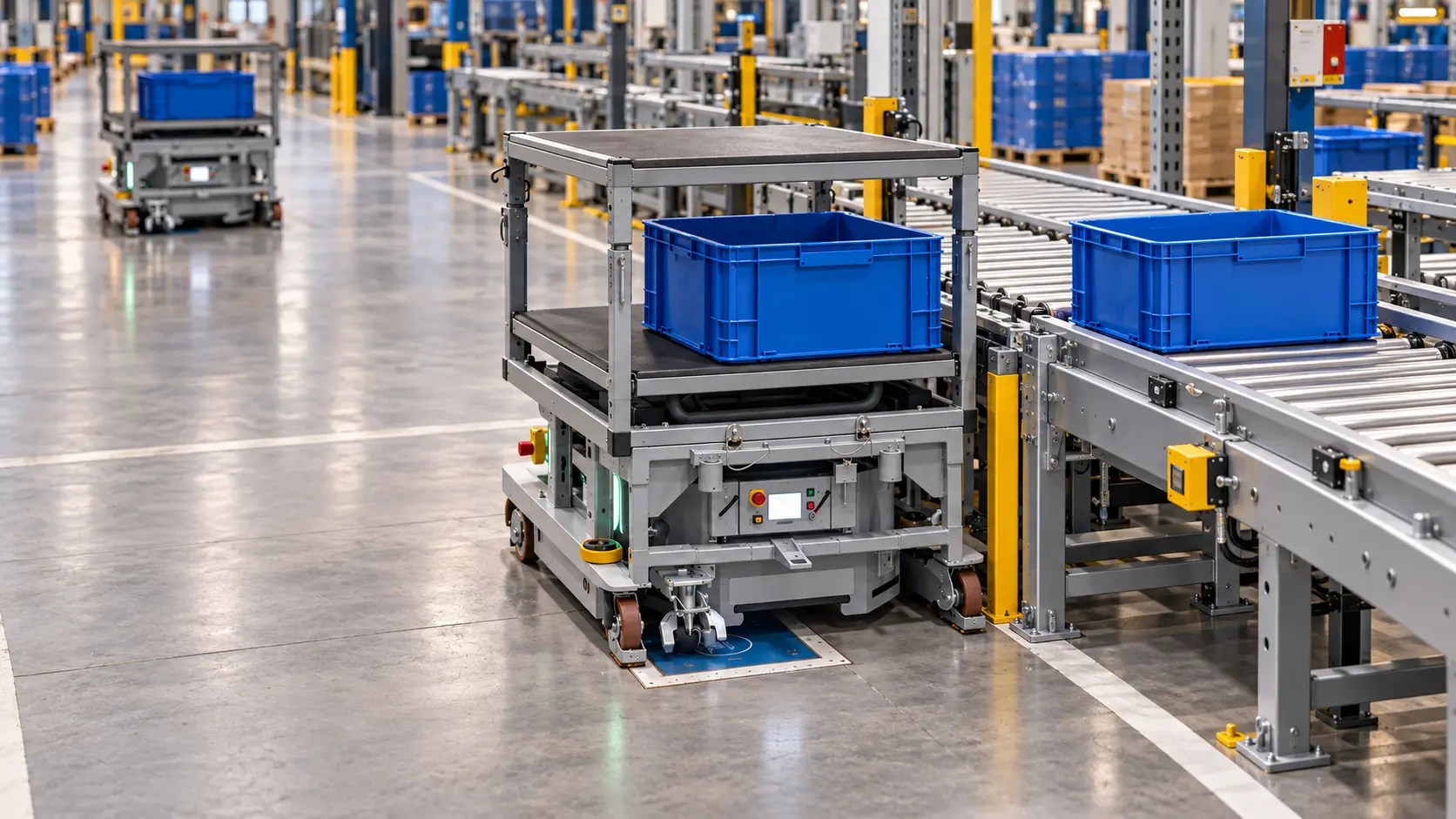
Instead of sending a robot to a separate docking area whenever it needs power, selected charging points can be built into handoff stations, staging areas, production cells, or other predictable stops in the route. Compatible robots can then add energy during short, repeatable pauses while staying close to their next task.
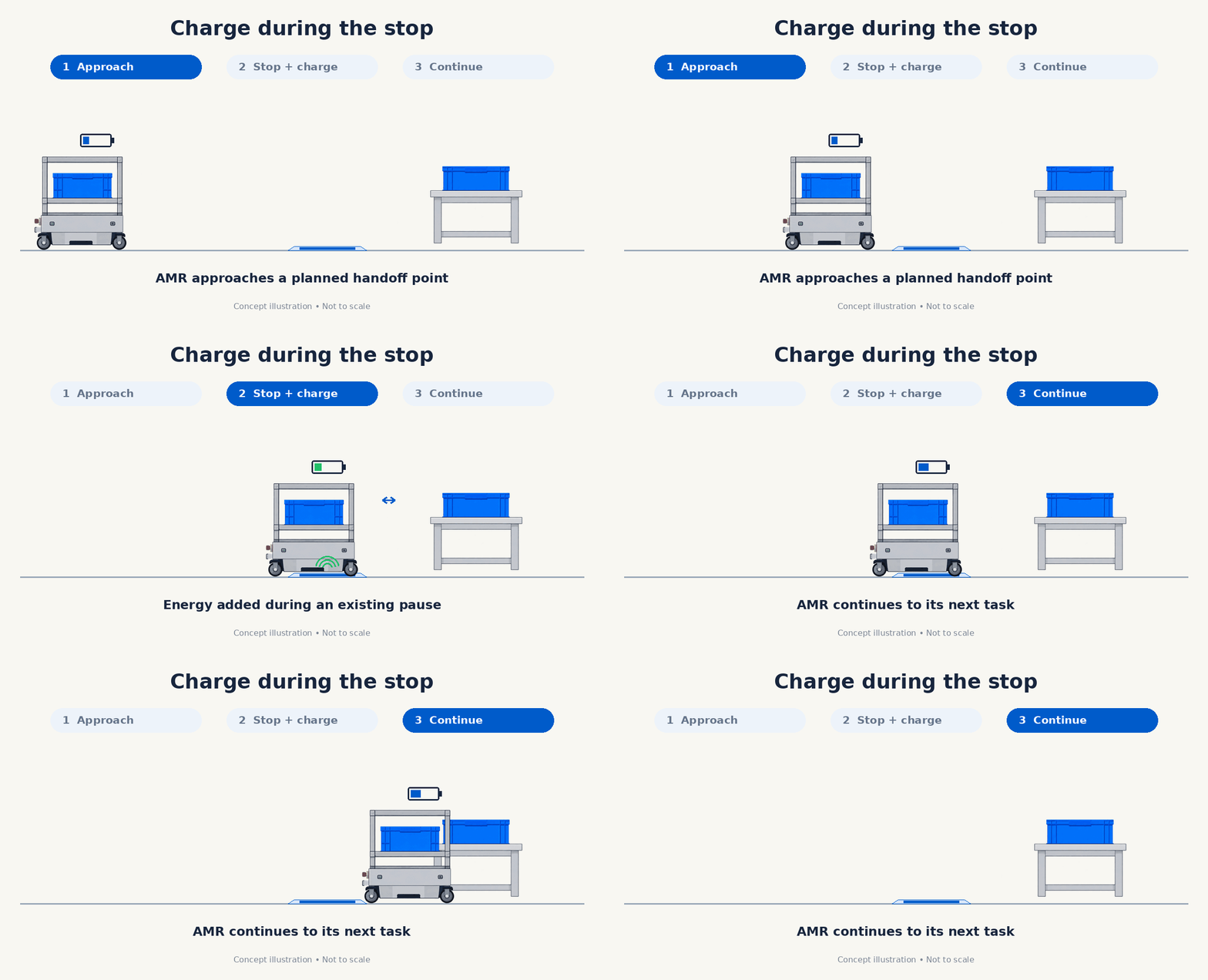
Bringing charging closer to the process
This is where PohlCon’s Wireless Charging Protection System, or WCPS, becomes relevant.
WCPS is designed to help integrate wireless charging infrastructure into the areas where mobile robots operate, including transfer stations, staging areas, and raised-floor production environments.
For supported OMRON mobile robot configurations, including the new LD Series and OL-450S, the wireless charging setup uses Wiferion’s etaLINK 3000 technology to support contactless opportunity charging within the normal flow of work.
In this configuration, PohlCon provides the protected, process-integrated infrastructure that allows charging points to be placed where the robot already operates, while Wiferion provides the contactless power transfer technology.
Wiferion, a PULS brand, also offers related solutions for mobile robotics applications, including the etaLINK 3000r and CW1000, depending on the robot model, charging requirements, and facility setup.
Designed for real facility constraints
Charging infrastructure has to fit the facility, not the other way around.
In some environments, a flush, in-ground charging point may be the best fit. In cleanrooms, semiconductor facilities, or other raised-floor applications, charging may need to be integrated into the raised access floor. In existing facilities, an on-ground platform may provide a practical way to add wireless charging without major floor modification.
That flexibility matters because AMR deployments happen around real constraints: established equipment, safety requirements, traffic rules, operator access, and available floor space.
A process-integrated charging strategy should support those realities. The infrastructure should be placed where robots already need to stop, where access is predictable, and where charging can happen without disrupting people, equipment, or material flow.
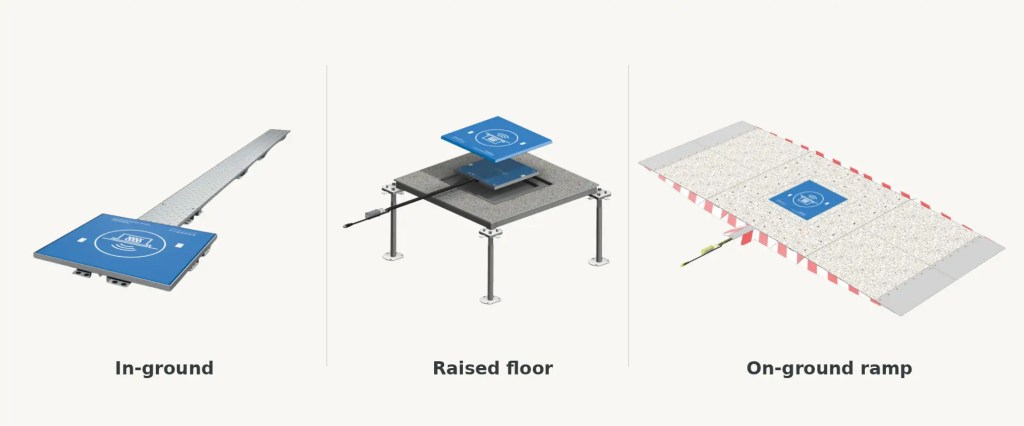
| Installation type | Best fit | Primary benefit |
|---|---|---|
| In-ground system | New or modified floor areas | Keeps the charging point flush with the floor |
| Raised floor system | Cleanrooms, semiconductor areas, and raised-access-floor environments | Integrates charging into the existing floor structure |
| On-ground platform | Existing facilities or retrofit applications | Provides a drive-on option without major floor modification |
“For AMR applications, productivity depends on how well the fleet fits into the full operation. By planning charging around routes, stops, and handoff points, robots can stay closer to the work they were designed to support.” — Mona Fahimi, Global Product Manager at OMRON Robotics
Traditional charging still has a place
Wireless charging is not the right answer for every AMR application, and it does not need to be.
Traditional docking stations remain a reliable and effective choice when the workflow provides enough time and space for them. In many facilities, they will continue to be the right solution.
In others, a combined approach may make sense: docking stations for longer charging periods, with in-process wireless charging used at selected stops to add energy during the normal flow of work.
That is why the most useful charging conversation is not simply:
“Dock or wireless?”
It is:
“Where does charging fit best in the way this fleet actually works?”
Routes, dwell times, traffic patterns, floor space, shift schedules, and future fleet growth all influence the answer.
Start with the stops
A good charging strategy starts by watching the fleet in motion.
Where do robots pause? Which stops happen again and again? Where does charging create extra travel? Where is floor space tight?
These questions can reveal opportunities that may not be obvious at first. The best charging location may be a conveyor transfer point, a staging area, or a handoff location the robot already visits throughout the day.
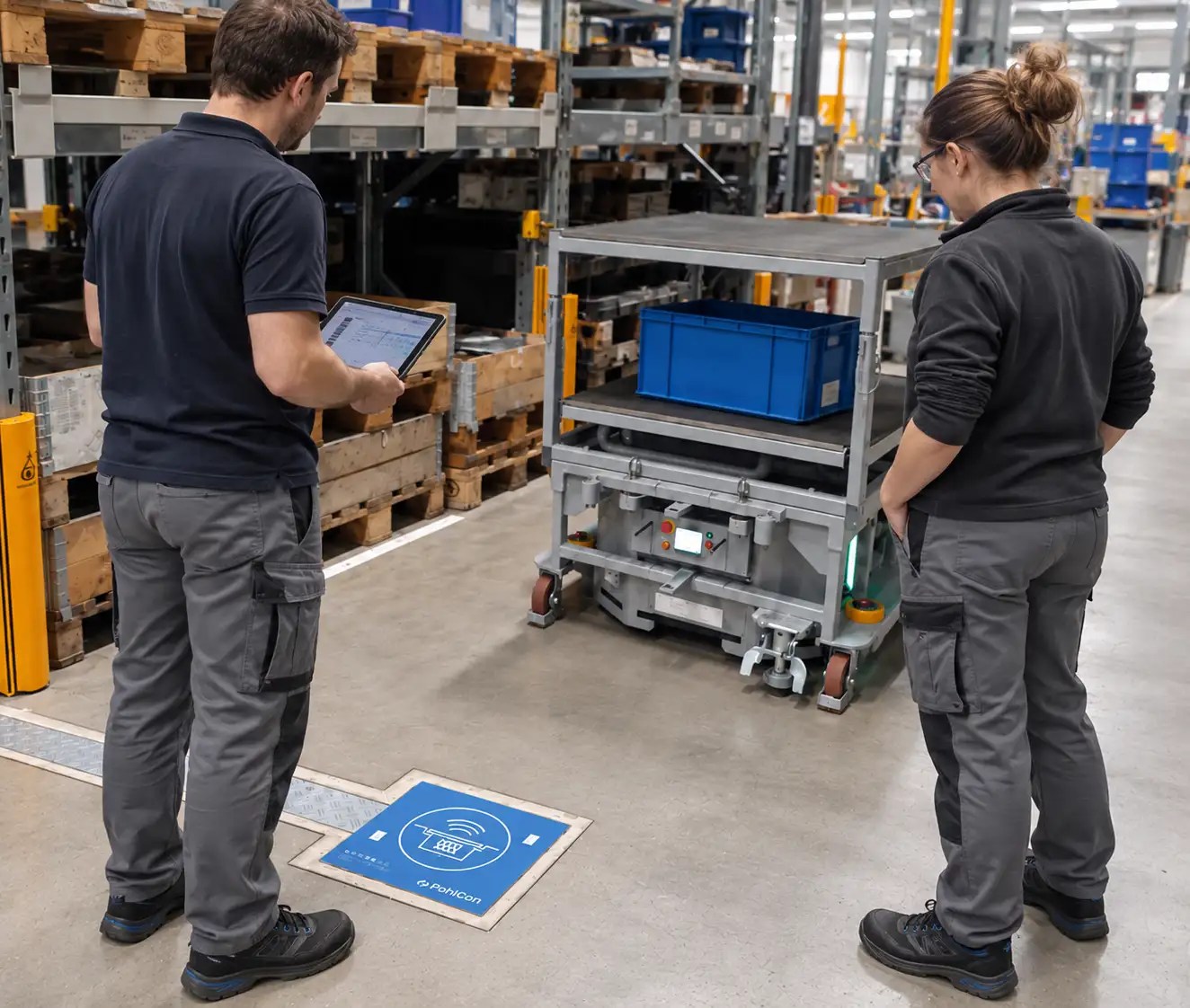
Together, OMRON mobile robots, PohlCon WCPS infrastructure, and Wiferion wireless charging technology can help turn selected AMR stops into practical charging opportunities. With the right infrastructure in place, selected pauses can become charging moments instead of requiring a separate trip away from the workflow.
If you are planning a new AMR deployment or looking to improve an existing one, start with the stops. OMRON can help evaluate where robots pause, where charging creates extra travel, and where in-process wireless charging may fit naturally into your operation.
The result is an energy strategy designed around the way work actually moves.
About the partners
PohlCon
PohlCon engineers and supplies robust, process-integrated charging infrastructure for mobile robots, including in-ground, on-ground, and raised-floor systems designed for a wide range of industrial environments.
Wiferion
Wiferion, a PULS brand, develops wireless power and energy systems for mobile robotics. Technologies such as etaLINK 3000, etaLINK 3000r, and CW1000 support contactless charging and help integrate energy supply into industrial workflows.
OMRON Robotics
Backed by nearly 100 years of OMRON innovation and more than 40 years of robotics expertise, OMRON Robotics provides automation solutions for manufacturing and logistics. Its mobile robot portfolio helps facilities improve productivity, flexibility, and material flow.
Back to blog

Stay connected

Related insights
See all case studies
Comau and OMRON Robotics Collaborate to Accelerate Advanced Industrial Automation Across High-Growth Manufacturing Sectors
OMRON Introduces New OL-450S Mast Options for Cart Transport Automation
Danfoss Improves Warehouse Flow Without Expanding Floor Space